Complete Guide to Buying an EV in Singapore (2026)
- Go Electric

- Apr 2
- 5 min read
Updated: Apr 4
Buying an EV in Singapore has never made more financial sense — and 2026 is a critical year to act. Government rebates are still on the table, but they're tapering. New models are arriving faster than ever. And with over 40% of new car registrations now electric, the question has shifted from "should I go electric?" to "which EV, and when?"
This guide cuts through the noise and gives you what you actually need to make a smart decision.

Why 2026 Is a Decision Year
The two main government incentive schemes — the EV Early Adoption Incentive (EEAI) and the Vehicular Emissions Scheme (VES) — have been extended through 2026, but both are being wound down.
Here's what that means in real numbers:
In 2026, you can save up to S$30,000 off your ARF:
EEAI: 45% rebate on Additional Registration Fee (ARF), capped at S$7,500
VES Band A: Rebate of S$22,500 (most fully electric cars qualify)
ARF floor: S$0 for qualifying EVs, maintained through end-2027
From 2027, the combined savings drop to S$20,000. The EEAI disappears entirely after December 2026.
If you're on the fence, the maths are simple: waiting costs you up to S$10,000.
Understanding the Cost Structure
Before you fall in love with a model, understand how Singapore EV pricing actually works.
Your total upfront cost = OMV + ARF + COE + GST + dealer margin
OMV (Open Market Value): Assessed by Singapore Customs — the base import value of the car
ARF (Additional Registration Fee): Calculated as a percentage of OMV, tiered upward. This is where your rebates apply.
COE: The Certificate of Entitlement — the wildcard. Category A COE (for cars under 110kW) has been more affordable; most budget EVs are engineered to qualify
VES rebate: Applied automatically at registration based on the car's emissions band — nearly all EVs fall into Band A
Pro tip: Always ask dealers for the price breakdown showing OMV, pre-rebate ARF, and post-rebate ARF separately. Don't accept a single "after-rebate" sticker price without seeing how it's derived.
Which EV Should You Buy?
The Singapore market has matured significantly. Here's how to think about the key segments:
Budget-Conscious (S$100,000–S$140,000 after rebates)
BYD Atto 3, MG 4, BYD Seal — Category A COE eligible, strong value, good range. BYD in particular has dominated the market and has established local service infrastructure.
Mid-Range (S$140,000–S$200,000)
Tesla Model 3, Hyundai Ioniq 6, BMW iX1 — Strong software ecosystems, reliable resale value, better performance specs.
Premium (S$200,000+)
Mercedes EQS, BMW iX, Volvo EX90 — If you're in this segment, the rebates are less decisive than long-term running costs and brand positioning.
What actually matters when comparing:
Real-world range in Singapore conditions — not the manufacturer's WLTP figure. Singapore's stop-start urban driving and air-conditioning loads typically reduce range by 15–20%
Charging compatibility — CCS2 is the dominant standard here; make sure your car and your preferred chargers are aligned
Battery warranty — look for 8 years / 160,000 km minimum
Local service network — a brand with one authorised workshop in Singapore is a risk
Total Cost of Ownership: The Real Case for EVs
The purchase price is only the beginning. Over a 10-year ownership cycle, the picture shifts significantly.
Where EVs win:
Fuel: Charging at an HDB carpark at ~$0.40–0.67/kWh versus petrol at $2.60+/litre. Expect to save S$200–S$400/month depending on mileage
Road tax: Calculated on power output (kW), generally lower than equivalent petrol cars
Maintenance: No oil changes, fewer brake replacements (regenerative braking), simpler drivetrain. Savings of S$500–S$1,500/year versus a petrol equivalent
PARF rebate: Your Preferential ARF is based on the net ARF you paid — lower ARF now means lower PARF later, so factor this into your 10-year model
Where EVs need careful thought:
Higher upfront purchase price (partially offset by rebates)
Battery replacement cost if outside warranty (though this is becoming less of a concern as battery longevity improves)
Charging convenience if you don't have reliable access to a home or workplace charger
The Charging Question: Settle This Before You Buy
This is the single most important practical question for Singapore buyers.
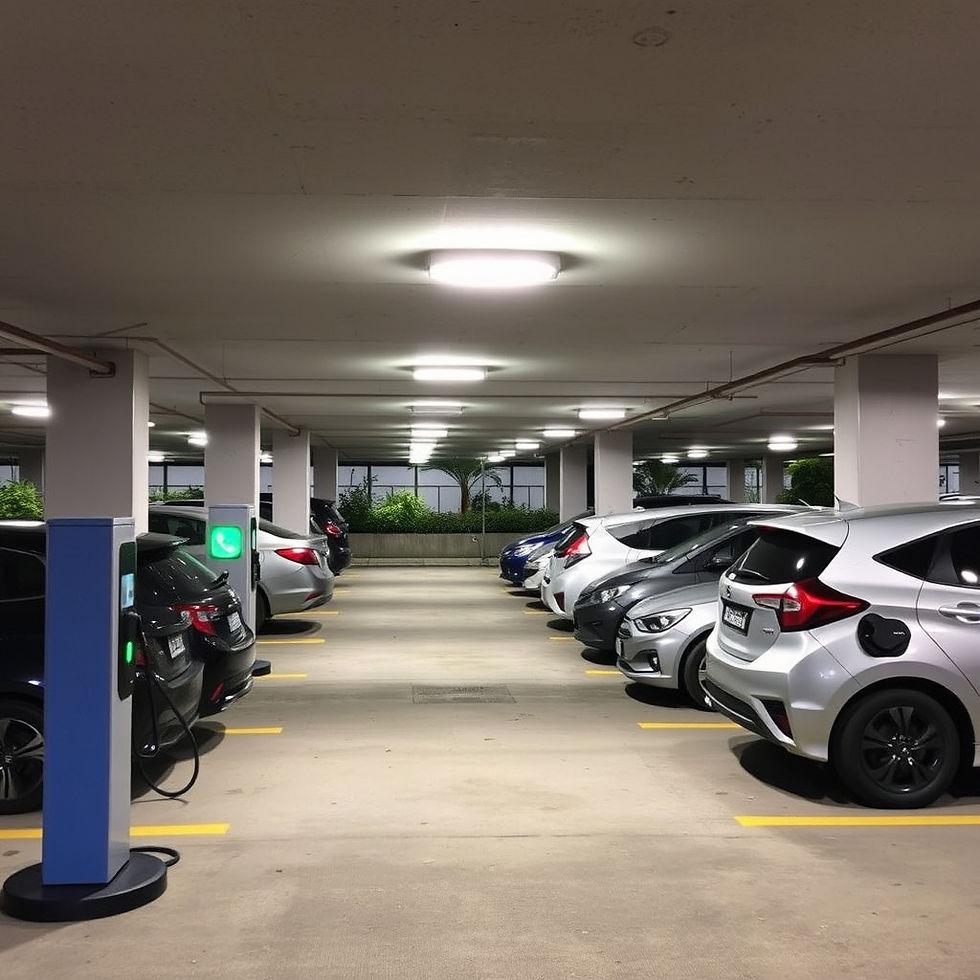
HDB residents: You cannot install a private charger in a public carpark. You rely on the public charging network — which has improved substantially. Over 1,600 HDB carparks now have chargers installed, with fast-charging hubs planned in every HDB town by end-2027. If your estate has reliable coverage, EV ownership is workable. If coverage is patchy, factor in the inconvenience honestly.
Condo residents: You can advocate for shared charger installation through your MCST. The EV Common Charger Grant (ECCG) co-funds up to 50% of installation costs (capped at S$3,000–S$4,000 per charger) and is available until end-2026. As of early 2026, over 1,700 chargers have been installed in condominiums. Get the vote passed sooner rather than later — this grant won't last forever.
Landed homeowners: You have the most flexibility — a home wallbox (7kW–22kW AC) is the gold standard for EV ownership. Installation typically costs S$3,500–S$8,000. You'll charge overnight and almost never need a public charger for daily use.
Step-by-Step: How to Buy
Shortlist 2–3 models based on your budget, charging situation, and range needs
Request a full price breakdown from at least two authorised dealers — OMV, ARF pre- and post-rebate, COE, GST, dealer charges
Verify VES band for your chosen model on LTA's OneMotoring portal — don't take the dealer's word alone
Confirm rebate eligibility — EEAI and VES rebates are applied automatically at registration, but check that your model qualifies
Sort your charging plan before you sign anything
Test drive in Singapore conditions — not on an empty expressway
What to Watch in the Second Half of 2026
COE prices: These fluctuate and can significantly affect the landed price of any car. Watch the bimonthly COE bidding results
New model arrivals: Nio Firefly (launched January 2026), and additional BYD and Xpeng models are entering the market, which may affect pricing and resale values of current models
EEAI expiry: The incentive ends December 31, 2026. If you're planning to buy in late 2026, factor in lead times — popular models can have 2–4 month wait times
Bottom Line
EVs in Singapore make financial and practical sense for most car owners in 2026 — particularly if you have reliable charging access. The rebate window is closing. The market is maturing. And the operational savings are real.
Don't overbuy on range (Singapore is 50km across). Don't underspend on after-sales support. And don't assume the 2025 incentive numbers still apply — 2026 is a different landscape.
Sources: LTA OneMotoring, NEA, Ministry of Transport Singapore. Prices and incentive figures accurate as of April 2026 and subject to change.
Comments